In many districts, the curriculum is treated like a “wrapped gift”. A finished package created at the district level and handed down to the classroom. But the reality is that a “gift” without teacher input often leads to a lack of buy-in, disengaged lessons, and teachers who simply feel burnt out, explains Katy McCarthy, Instructional Technology Coordinator for Lafourche Parish School District.
At LACUE conference, McCarthy shared a behind-the-scenes look at how they include teachers in district-level assessment building:
The Magic of Collaborative District Teams
Lafourche builds district assessment teams by bringing together the “best of the best” across every grade level and course subject. By prioritizing this collaboration, even managing the logistics of substitutes to get everyone in the same room, the district creates a unique “magic”:
- Front-Line Expertise: Teachers stand in front of students every day; they know exactly what is happening in the classroom and what students need.
- The Rookie-Veteran Mix: New teachers bring fresh ideas and idealism, while veteran teachers provide content knowledge.
- Ownership and Leadership: When teachers author the items and analyze the data, they take ownership of the content. This process has transformed classroom teachers into instructional coaches and district leaders.
Deep Item Review and Data Analysis
In Lafourche Parish, the assessment process is defined by a “fine-tooth comb” approach to item review and data analysis. Rather than simply accepting pre-packaged tests, district teams, composed of teachers and curriculum leaders, deeply evaluate every question to ensure it truly jives with classroom instruction and state standards.
Assessment Item vetting process includes:
- Linguistic Alignment: Teams pull the question apart to look for the specific “language of the standard” within the item. For example, if a standard requires students to “develop ideas,” the team verifies that the question uses that exact terminology to ensure they are getting to the heart of the standard.
- Granular Tracking: The district utilizes a “one item, one standard” philosophy, often formatting tests with an item per page to track mastery at an extremely granular level.
- Depth of Standard: Reviewers ensure that every item is aligned not just to a topic, but to the specific “depth of the standard”.
- Correcting Misalignment: During review, teams often find and fix missing links, such as identifying when a two-part evidence question is missing a specific sub-standard (like RI.6.1) in its alignment documentation.
- Content Match: Teams compare “content taught versus content tested” to ensure assessments don’t provide wonky data by testing way more than what is actually necessary.
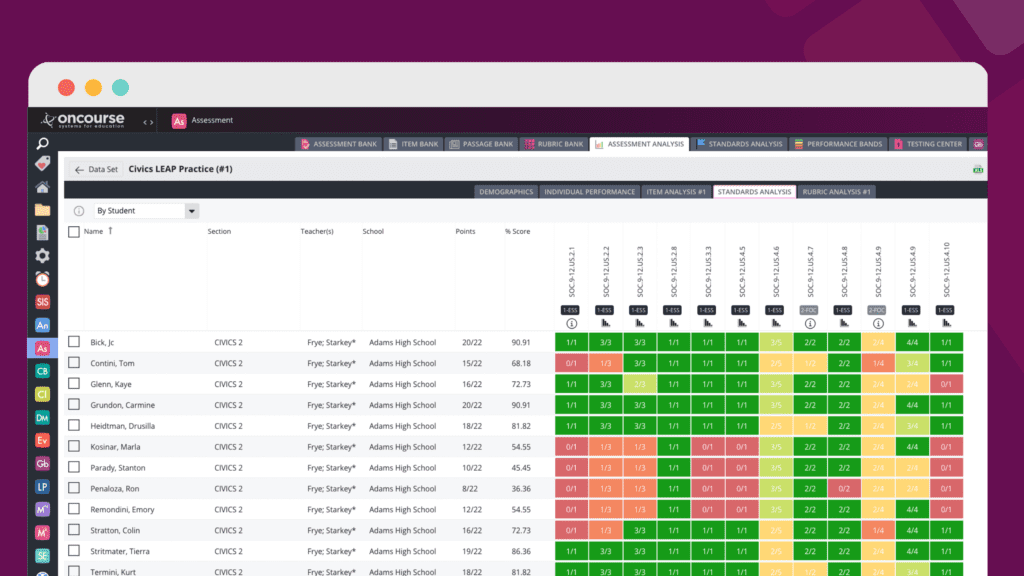
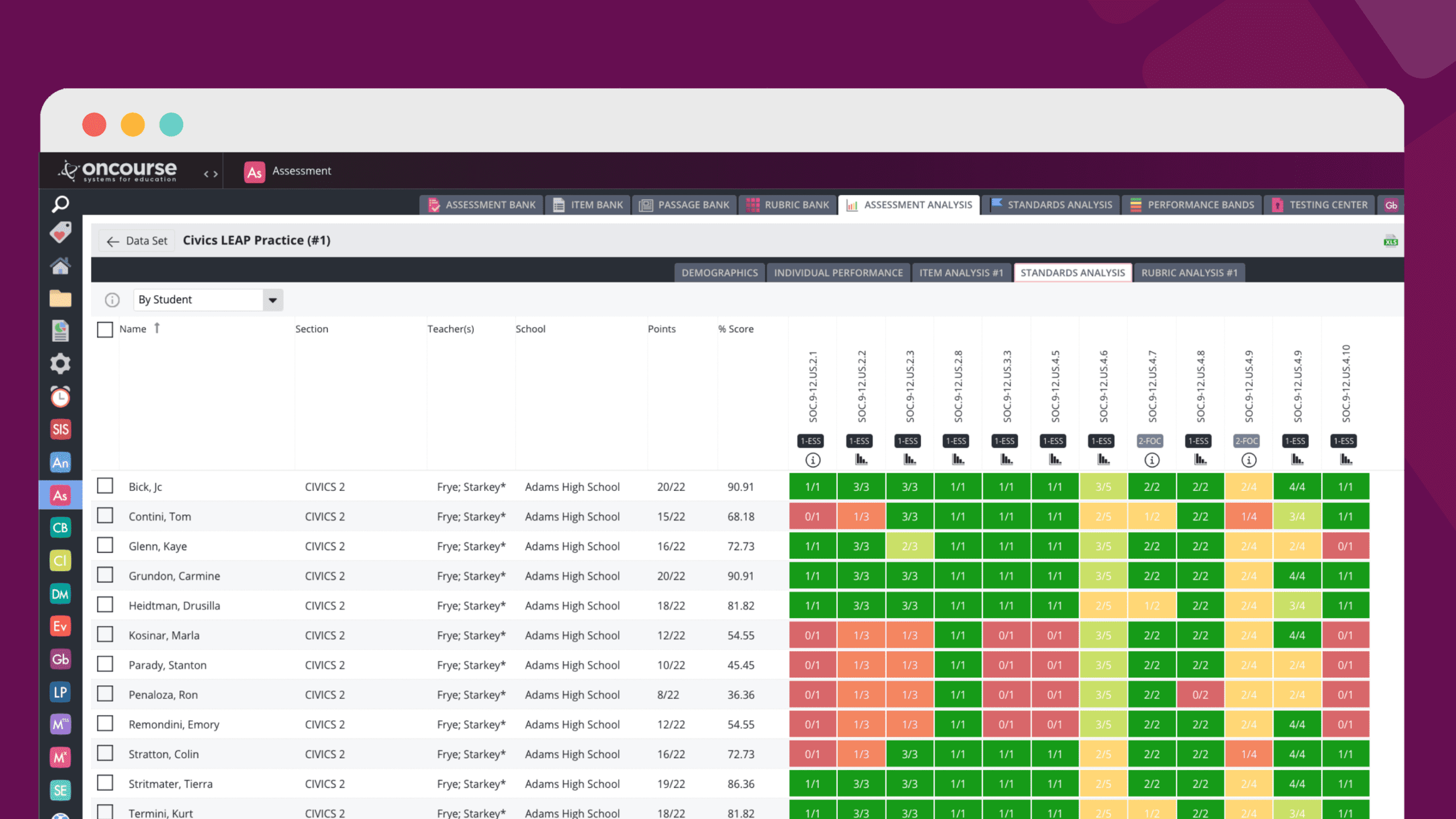
OnCourse Assessment Standards Analysis Dashboard
Digging Deeper into the Data
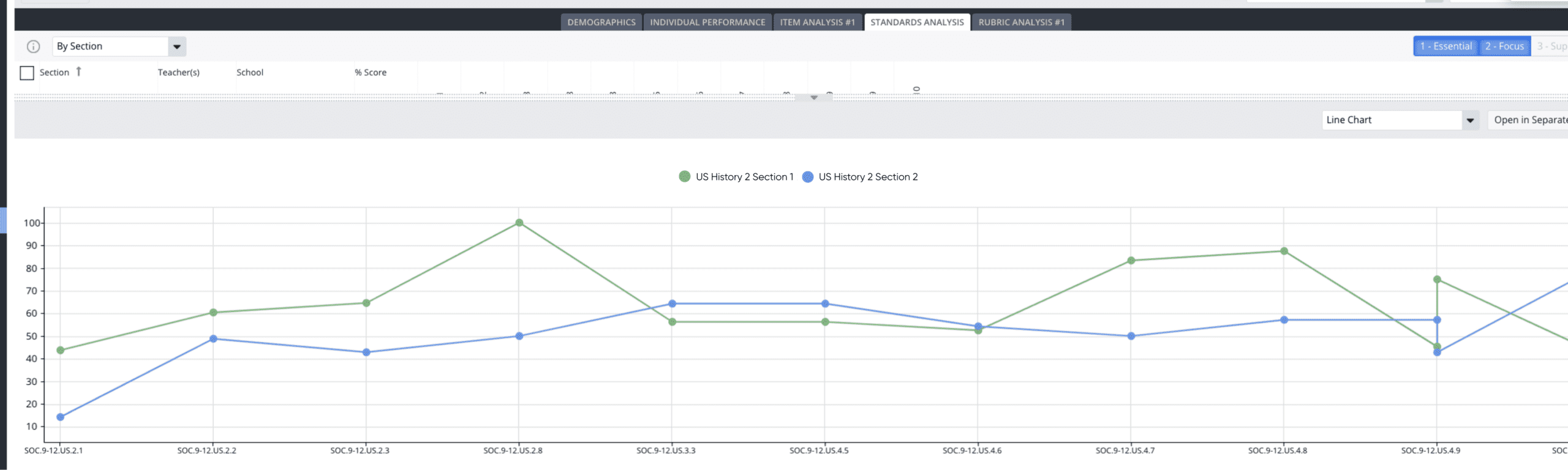
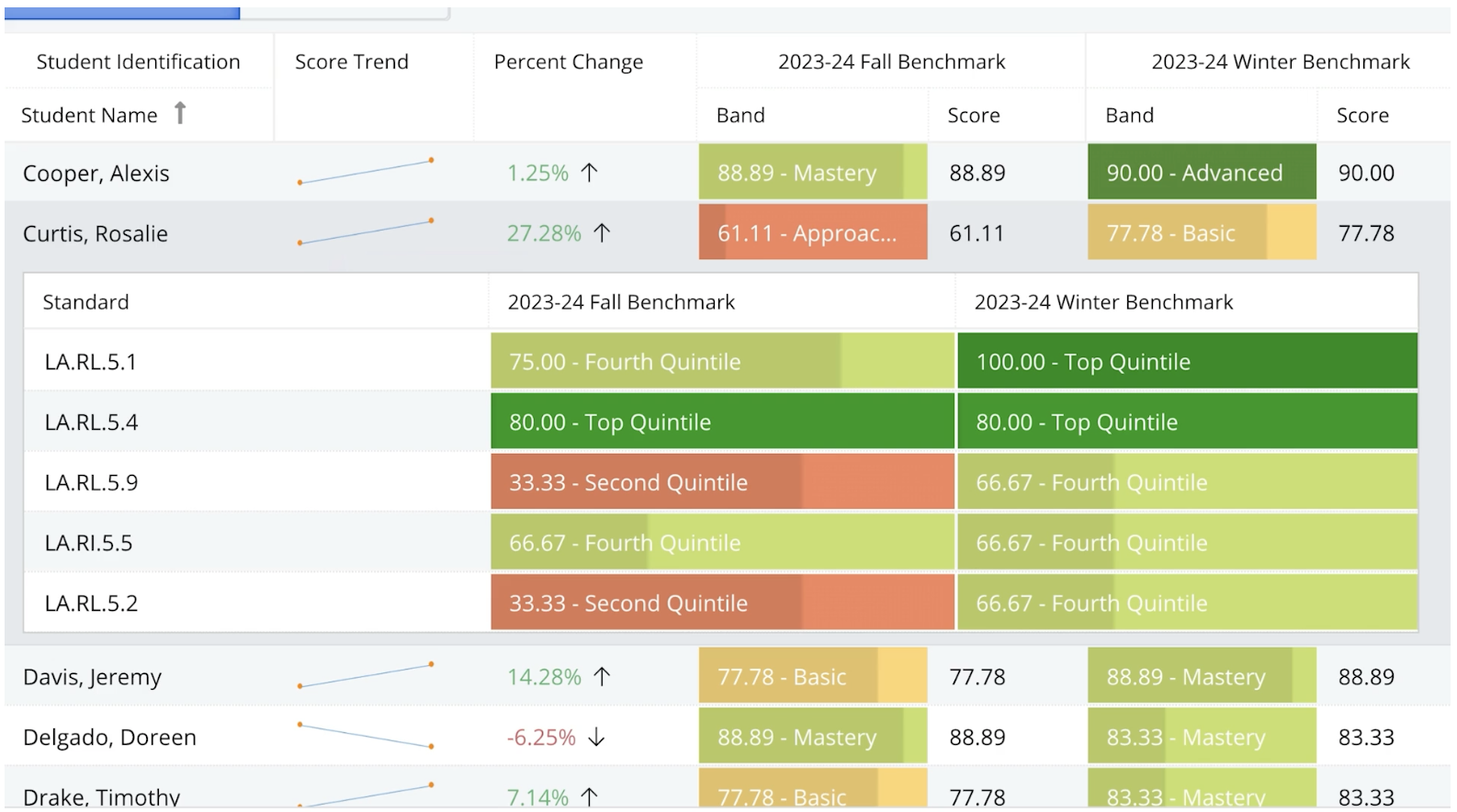
Data analysis in Lafourche Parish goes beyond looking at a final score. They use data to identify the “story” behind the numbers.
- Identifying “Bubble Kids”: Teachers use item-level screens to find students who share similar incorrect answer patterns. These “bubble kids” are then grouped for targeted remediation on specific standards.
- Analyzing Weakness Patterns: Educators look for patterns across class periods, identifying if lower scores are tied to specific times of day or specific types of questions, such as “MultiSelect” items being more difficult than single-choice.
- Standard-Based Remediation: When a standard like RL.3 (plot) shows as a weakness, teachers pull apart the standard to create an exploratory remediation plan, focusing on specific “major moments” the students missed.
- Predictive Success: With 12 years of historical district data, Lafourche Parish has “normed” its assessments. This allows them to predict state test performance with confidence.
How Lafourche and OnCourse Work Together
Lafourche Parish partners with OnCourse for Assessments and Analytics. By moving away from manual spreadsheets and wonky data, Lafourche Parish uses OnCourse to:
- Save Time: What used to take three days of merging data now takes seconds, allowing staff to focus on analyzing, not just pulling together, information.
- Be Proactive: Identify students who need support early.
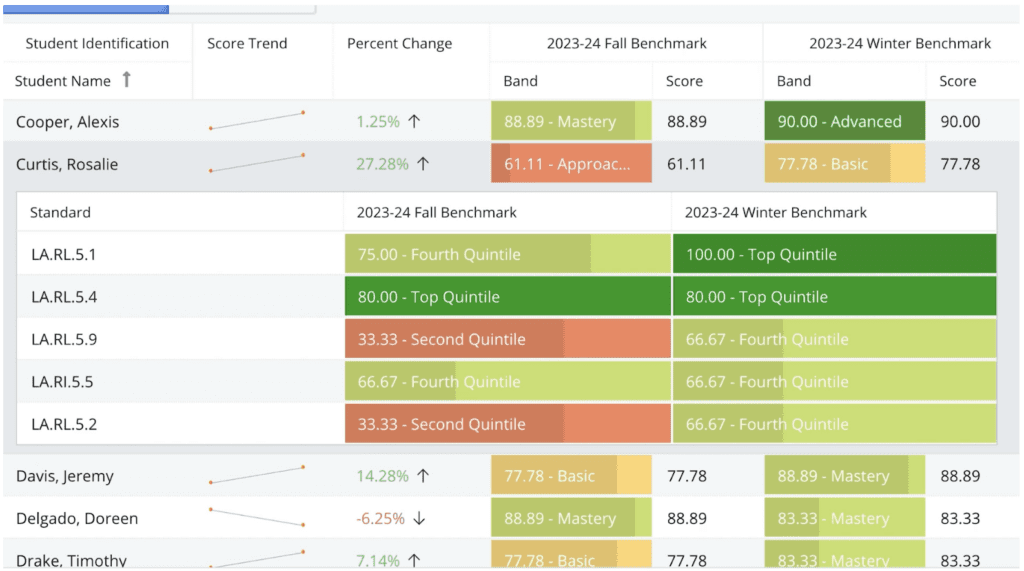
- Visualize Progress: Give administrators the visual “picture” of data they need to support the schools that need it most.
You can read more about the implementation process of OnCourse Assessment in Lafourche Parish here. Or watch a 2-minute preview of OnCourse Assessment below.